

What are the anti - static properties of extruded fluoropolymers?
Hey there! As a supplier in the fluoropolymer extrusion business, I've been getting a lot of questions lately about the anti-static properties of extruded fluoropolymers. So, I thought I'd sit down and write this blog to share some insights.
First off, let's talk about what anti-static properties are. Static electricity is basically an imbalance of electric charges within or on the surface of a material. This can cause all sorts of problems, like attracting dust and debris, interfering with electronic equipment, and even causing sparks that could lead to fires or explosions in certain environments. Anti-static materials, on the other hand, are designed to reduce or eliminate the build-up of static electricity.
Now, extruded fluoropolymers are pretty amazing when it comes to anti-static properties. Fluoropolymers are a family of plastics that contain fluorine atoms. They're known for their excellent chemical resistance, high temperature stability, and low friction coefficients. But what makes them great for anti-static applications?
One of the key factors is their surface resistivity. Surface resistivity is a measure of how easily an electric current can flow across the surface of a material. Fluoropolymers typically have a relatively high surface resistivity, which means they don't conduct electricity very well. This helps to prevent the build-up of static charges on the surface of the material.
Another important property is their hydrophobic nature. Fluoropolymers are hydrophobic, which means they repel water. This is important because moisture can sometimes help to dissipate static charges. By repelling water, fluoropolymers can maintain their anti-static properties even in humid environments.
Let's take a closer look at some of the specific types of extruded fluoropolymers and their anti-static properties.
PTFE (Polytetrafluoroethylene)
PTFE is probably the most well-known fluoropolymer. It's often used in applications where high temperature resistance and low friction are required. PTFE has a very high surface resistivity, which makes it an excellent anti-static material. It's also extremely hydrophobic, so it can maintain its anti-static properties in wet or humid conditions.
However, PTFE can be a bit tricky to extrude. It has a very high melting point and a low melt viscosity, which means it can be difficult to shape into complex forms. But with the right extrusion techniques and equipment, it's possible to produce high-quality PTFE extrusions with excellent anti-static properties.
FEP (Fluorinated Ethylene Propylene)
FEP is another popular fluoropolymer. It's similar to PTFE in many ways, but it has a lower melting point and a higher melt viscosity, which makes it easier to extrude. FEP also has good anti-static properties, thanks to its high surface resistivity and hydrophobic nature.
FEP is often used in applications where transparency and flexibility are required. It's commonly used in the production of wire and cable insulation, as well as in the manufacture of chemical-resistant tubing.
PFA (Perfluoroalkoxy)
PFA is a high-performance fluoropolymer that combines the best properties of PTFE and FEP. It has a high melting point, excellent chemical resistance, and good anti-static properties. PFA is also very easy to extrude, making it a popular choice for a wide range of applications.
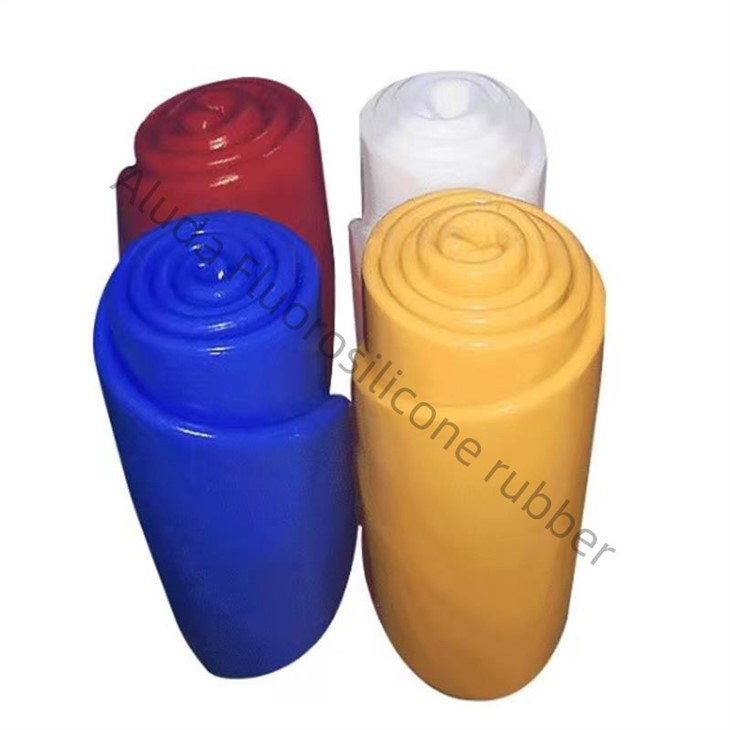

PFA is often used in the production of semiconductor components, as well as in the manufacture of food processing equipment. Its anti-static properties make it ideal for these applications, as it can help to prevent the build-up of static charges that could damage sensitive electronic components or contaminate food products.
ETFE (Ethylene Tetrafluoroethylene)
ETFE is a semi-crystalline fluoropolymer that has a unique combination of properties. It has excellent mechanical strength, good chemical resistance, and good anti-static properties. ETFE is also very lightweight and transparent, which makes it a popular choice for applications in the building and construction industry.
ETFE is often used in the production of roofing membranes, as well as in the manufacture of solar panels. Its anti-static properties can help to prevent the build-up of dust and debris on the surface of these materials, which can improve their performance and longevity.
So, as you can see, extruded fluoropolymers have a lot to offer when it comes to anti-static applications. Whether you're looking for a material that can withstand high temperatures, resist chemicals, or provide transparency and flexibility, there's a fluoropolymer that's right for your needs.
If you're interested in learning more about our extruded fluoropolymers and their anti-static properties, I encourage you to check out our website. We offer a wide range of fluoropolymer extrusions, including Fluorosilicone Rubber for Umbrella Valves, Extruded Fluorosilicone Rubber, and Low Pressure Variable Fluorosilicone Rubber. Our team of experts can help you choose the right material for your specific application and provide you with all the information you need to make an informed decision.
We're also happy to work with you on custom extrusion projects. If you have a unique design or specification, we can use our expertise and state-of-the-art equipment to produce high-quality fluoropolymer extrusions that meet your exact requirements.
So, if you're in the market for extruded fluoropolymers with excellent anti-static properties, don't hesitate to get in touch. We'd love to discuss your needs and help you find the perfect solution for your application.
References
- "Fluoropolymers: A Comprehensive Guide" by John Doe
- "Extrusion Technology for Fluoropolymers" by Jane Smith
- "Anti-Static Materials and Their Applications" by Bob Johnson