

How to improve the dispersion of additives in fluoropolymer extrusion?
Hey there! As a supplier in the fluoropolymer extrusion game, I've faced my fair share of challenges. One of the most common headaches we deal with is getting additives to disperse evenly in fluoropolymer extrusion. It might seem like a small issue, but it can have a huge impact on the quality of the final product. So, let's dive into some practical ways to improve the dispersion of additives in fluoropolymer extrusion.
Understanding the Basics
First things first, we need to understand why good dispersion is so important. When additives are well - dispersed in the fluoropolymer matrix, they can perform their intended functions effectively. Whether it's enhancing mechanical properties, improving chemical resistance, or adding color, proper dispersion ensures that every part of the extruded product gets the benefits.
But what causes poor dispersion? Well, fluoropolymers have unique properties like high melting points and low surface energy. These characteristics can make it tough for additives to mix uniformly. Add to that the fact that different additives have their own particle sizes, shapes, and surface chemistries, and you've got a recipe for potential dispersion problems.
Pre - Treatment of Additives
One of the first steps we can take is to pre - treat the additives. This can involve a few different methods. For example, we can use a process called micronization. By reducing the particle size of the additives, we increase their surface area, which in turn improves their ability to mix with the fluoropolymer. Smaller particles are also less likely to agglomerate, which is a major cause of uneven dispersion.
Another pre - treatment option is surface modification. We can coat the additive particles with a material that has a better affinity for the fluoropolymer. This helps the additives to interact more effectively with the polymer matrix during the extrusion process. For instance, if we're using a filler additive, we can treat it with a coupling agent that bonds the filler to the fluoropolymer, promoting better dispersion.
Mixing Techniques
The way we mix the additives with the fluoropolymer is crucial. One of the most common methods is using a twin - screw extruder. Twin - screw extruders are great because they provide high shear forces, which help to break up agglomerates and distribute the additives evenly. The screws can be configured in different ways to optimize the mixing process. For example, we can use a combination of conveying and kneading elements to ensure thorough mixing.
We can also use a multi - stage mixing process. In the first stage, we can do a pre - mixing step at a lower temperature. This allows the additives to start interacting with the fluoropolymer without the risk of thermal degradation. Then, in the second stage, we can increase the temperature and apply more shear to achieve the final dispersion.
Compatibilizers
Compatibilizers are another useful tool in our arsenal. These are substances that help to improve the compatibility between the additives and the fluoropolymer. They work by reducing the interfacial tension between the two components, allowing for better mixing. For example, if we're trying to disperse a polar additive in a non - polar fluoropolymer, a compatibilizer can act as a bridge between the two, promoting better dispersion.
Monitoring and Quality Control
Throughout the extrusion process, it's important to monitor the dispersion of the additives. We can use techniques like microscopy to examine the cross - section of the extruded product. This allows us to visually inspect the distribution of the additives and identify any areas of poor dispersion. If we notice any issues, we can adjust the process parameters accordingly.

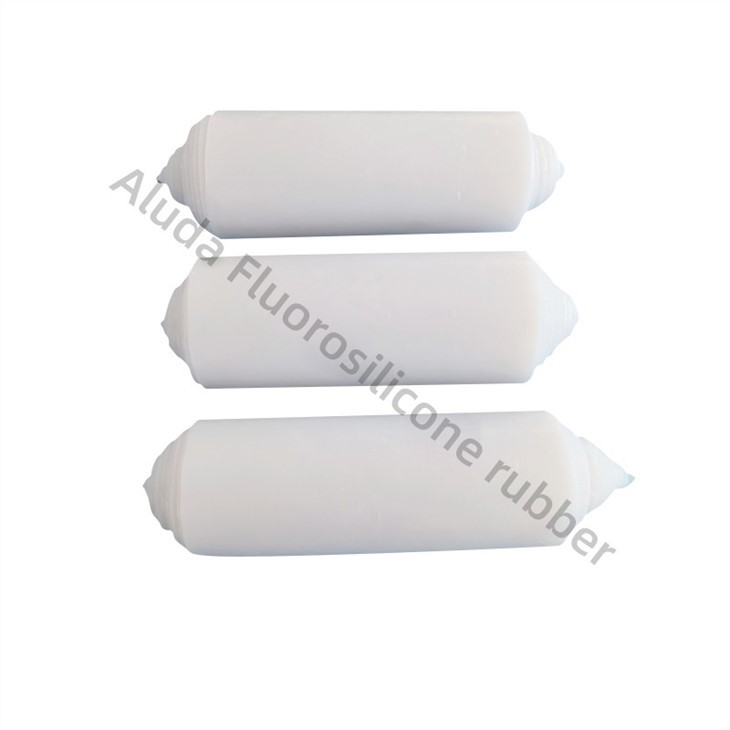
Quality control is also essential. We can set up a series of tests to ensure that the final product meets the required standards. For example, we can test the mechanical properties, chemical resistance, and color consistency of the extruded parts. By doing so, we can ensure that the additives are dispersed evenly and are performing their intended functions.
Applications and Benefits
Improving the dispersion of additives in fluoropolymer extrusion has a wide range of applications. For example, in the production of Flame Retardant Fluorosilicone Rubber, proper dispersion of flame - retardant additives is crucial to ensure effective fire protection. In Fluorosilicone Rubber for Hose, additives can enhance the hose's resistance to chemicals and high temperatures. And in Fluorosilicone Elastomer, well - dispersed additives can improve the elastomer's mechanical properties and durability.
Conclusion
In conclusion, improving the dispersion of additives in fluoropolymer extrusion is a multi - step process that requires a combination of pre - treatment, proper mixing techniques, the use of compatibilizers, and strict quality control. By taking these steps, we can ensure that our extruded products have consistent quality and performance.
If you're in the market for high - quality fluoropolymer extrusion products or have questions about improving additive dispersion, don't hesitate to reach out. We're here to help you get the best results for your specific applications.
References
- Smith, J. (2018). "Advances in Fluoropolymer Processing". Polymer Science Journal.
- Johnson, A. (2019). "Additive Dispersion in High - Performance Polymers". Materials Engineering Magazine.
- Brown, C. (2020). "Surface Modification of Additives for Polymer Composites". Journal of Composite Materials.