

What is the flexural strength of extruded rubber profiles?
Hey there! As a supplier of extruded rubber profiles, I often get asked about the flexural strength of these products. So, I thought I'd dive into this topic and share some insights with you.

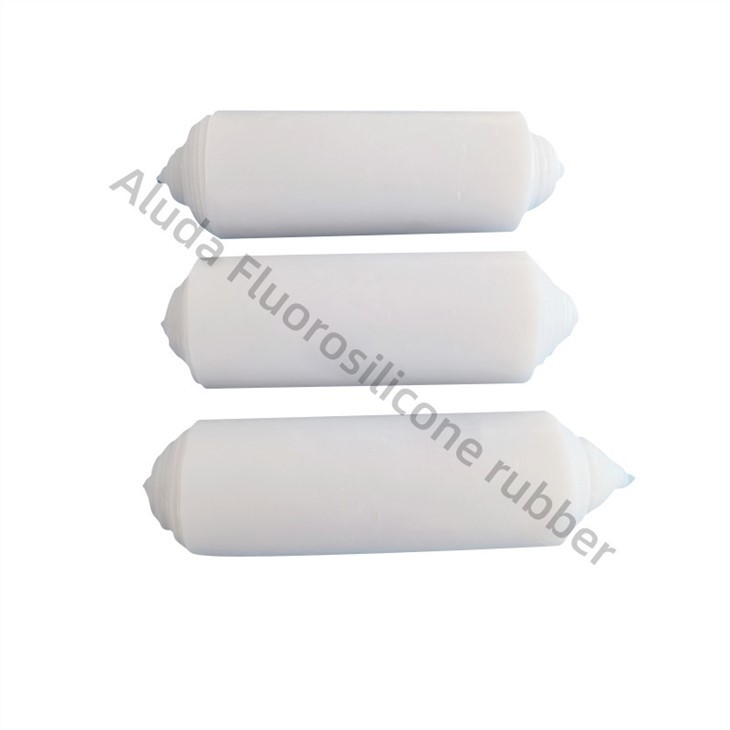
First off, let's understand what flexural strength is. Flexural strength, also known as bend strength, is the ability of a material to resist deformation under bending forces. In the context of extruded rubber profiles, it's crucial because these profiles are often used in applications where they need to bend or flex without breaking or losing their shape.
The flexural strength of extruded rubber profiles depends on several factors. One of the most significant factors is the type of rubber used. Different rubber compounds have different mechanical properties, which directly affect their flexural strength.
For instance, High Tear Resistance Fluorosilicone Rubber is known for its excellent tear resistance and good flexibility. This type of rubber can withstand repeated bending and flexing without tearing easily, making it a great choice for applications where high flexural strength is required.
Another type is Adhesive Fluorosilicone Rubber. This rubber not only has good adhesion properties but also offers decent flexural strength. It can be used in applications where the rubber profile needs to be adhered to a surface while still being able to flex.
Conductive Fluorosilicone Rubber is also an interesting option. In addition to its conductive properties, it has sufficient flexural strength for many applications. It can be used in electronic devices where the rubber profile needs to flex while maintaining electrical conductivity.
The manufacturing process also plays a big role in determining the flexural strength of extruded rubber profiles. During the extrusion process, the rubber is forced through a die to create the desired shape. The way the rubber is processed, including factors like temperature, pressure, and extrusion speed, can affect its internal structure and, consequently, its flexural strength.
For example, if the extrusion temperature is too high, the rubber may degrade, leading to a decrease in flexural strength. On the other hand, if the pressure is too low, the rubber may not be properly compacted, resulting in a less dense and weaker profile.
The cross - sectional shape of the extruded rubber profile is another important factor. Profiles with a more complex or thicker cross - section generally have higher flexural strength. A solid, thick rubber profile will be able to resist bending forces better than a thin, hollow one. However, the choice of cross - sectional shape also depends on the specific application. Sometimes, a thinner or more flexible profile may be required, even if it means sacrificing some flexural strength.
Let's talk about how we test the flexural strength of extruded rubber profiles. One common method is the three - point bending test. In this test, a sample of the rubber profile is placed on two supports, and a load is applied at the center. The load is gradually increased until the sample breaks or reaches a certain level of deformation.
The results of the three - point bending test are used to calculate the flexural strength of the rubber profile. The flexural strength is usually expressed in units of pressure, such as pounds per square inch (psi) or megapascals (MPa).
In real - world applications, the required flexural strength of extruded rubber profiles can vary widely. For example, in automotive applications, rubber profiles used in door seals need to have enough flexural strength to withstand repeated opening and closing of the doors without cracking or losing their sealing properties.
In the construction industry, rubber profiles used in window seals need to be able to flex as the building moves due to temperature changes or wind loads. If the flexural strength is not sufficient, the seals may fail, leading to leaks and energy inefficiencies.
When choosing an extruded rubber profile for a specific application, it's important to consider all these factors. You need to select the right type of rubber, the appropriate cross - sectional shape, and ensure that the manufacturing process is optimized to achieve the desired flexural strength.
As a supplier, we have a lot of experience in producing extruded rubber profiles with different flexural strengths. We work closely with our customers to understand their specific requirements and then recommend the most suitable rubber compound and manufacturing process.
We can also customize the cross - sectional shape of the rubber profiles to meet the unique needs of each application. Whether you need a simple rectangular profile or a complex, custom - designed shape, we can produce it for you.
If you're in the market for extruded rubber profiles and have questions about flexural strength or any other properties, don't hesitate to reach out. We're here to help you find the best solution for your application. Whether it's for automotive, construction, electronics, or any other industry, we have the expertise and resources to provide high - quality extruded rubber profiles.
Contact us today to discuss your requirements and start a procurement negotiation. We're confident that we can offer you the right products at competitive prices.
References
- ASTM D790 - Standard Test Methods for Flexural Properties of Unreinforced and Reinforced Plastics and Electrical Insulating Materials
- Rubber Technology Handbook, by Werner Hofmann