

What is the heat transfer coefficient of extruded rubber profiles?
What is the heat transfer coefficient of extruded rubber profiles?
As a leading supplier of extruded rubber profiles, I often encounter questions from clients regarding the heat transfer coefficient of our products. Understanding this parameter is crucial for applications where temperature management is a concern, such as in automotive, aerospace, and industrial machinery. In this blog post, I'll delve into what the heat transfer coefficient is, how it relates to extruded rubber profiles, and factors that influence it.
Understanding the Heat Transfer Coefficient
The heat transfer coefficient, often denoted as "h," is a measure of the ability of a material to transfer heat between a solid surface and a fluid (liquid or gas) flowing over it. It is defined as the rate of heat transfer per unit area per unit temperature difference between the surface and the fluid. The SI unit for the heat transfer coefficient is watts per square meter per kelvin (W/(m²·K)).
In simpler terms, a high heat transfer coefficient means that a material can transfer heat quickly, while a low heat transfer coefficient indicates that heat transfer occurs more slowly. For extruded rubber profiles, the heat transfer coefficient plays a significant role in determining how well the rubber can dissipate heat or act as an insulator.
Heat Transfer in Extruded Rubber Profiles
Extruded rubber profiles are used in a wide range of applications, each with unique heat transfer requirements. In some cases, such as in seals and gaskets, the rubber needs to act as an insulator to prevent heat transfer between different components. In other applications, like in heat exchangers or cooling systems, the rubber may need to facilitate heat transfer to maintain optimal operating temperatures.
The heat transfer in extruded rubber profiles occurs through three main mechanisms: conduction, convection, and radiation.
- Conduction: This is the transfer of heat through a solid material due to a temperature gradient. In rubber, conduction occurs as the vibrating molecules transfer energy to neighboring molecules. The thermal conductivity of rubber, which is related to the heat transfer coefficient, determines how efficiently heat can be conducted through the material.
- Convection: Convection involves the transfer of heat between a solid surface and a fluid (liquid or gas) due to the movement of the fluid. When a fluid flows over an extruded rubber profile, heat is transferred between the rubber surface and the fluid. The heat transfer coefficient in convection is influenced by factors such as the fluid velocity, viscosity, and the geometry of the rubber profile.
- Radiation: Radiation is the transfer of heat through electromagnetic waves. Although radiation is generally less significant in rubber compared to conduction and convection, it can still contribute to the overall heat transfer, especially at high temperatures.
Factors Affecting the Heat Transfer Coefficient of Extruded Rubber Profiles
Several factors can influence the heat transfer coefficient of extruded rubber profiles. Understanding these factors is essential for selecting the right rubber material and optimizing its performance in specific applications.
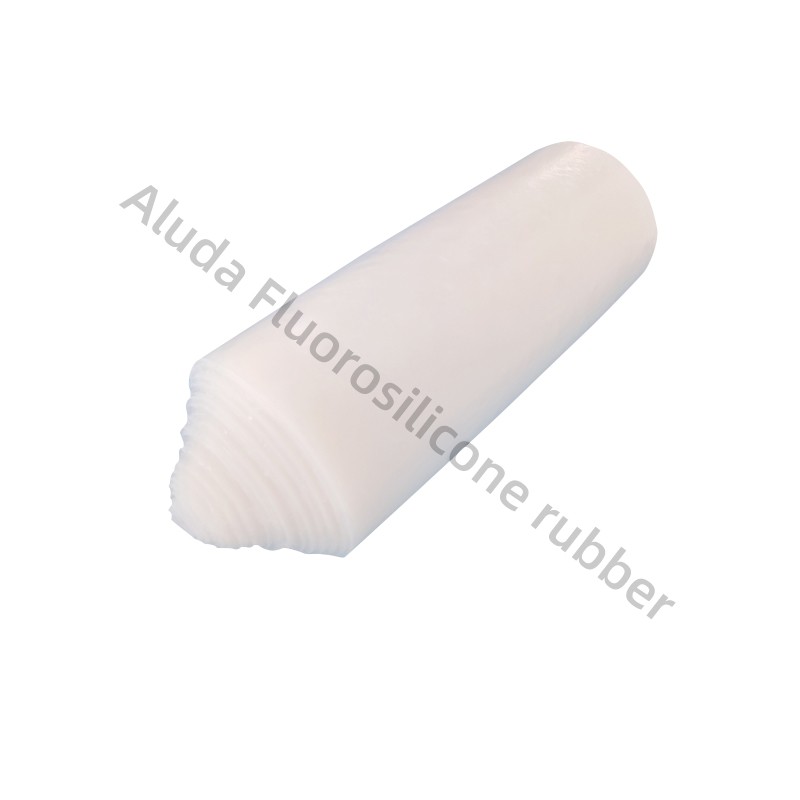
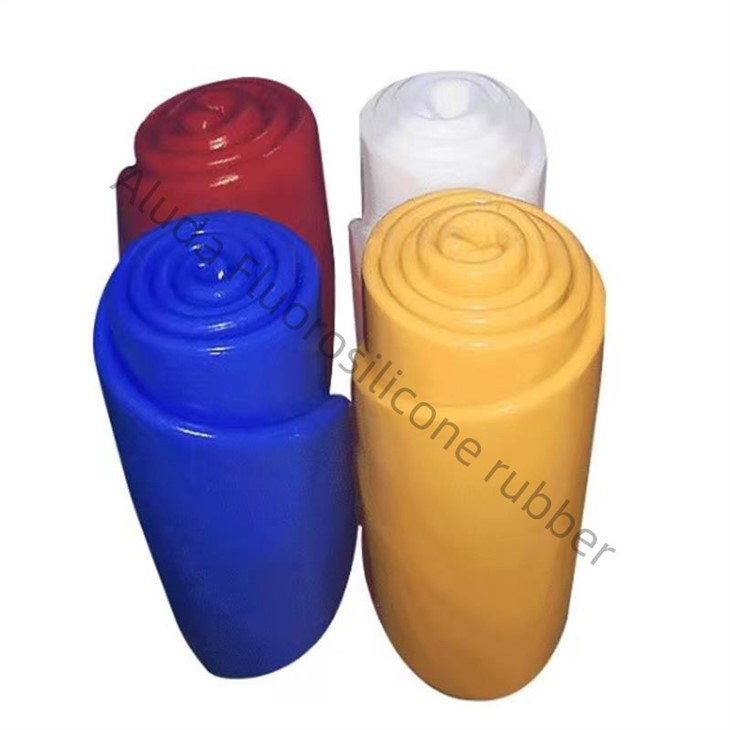
- Rubber Material: Different types of rubber have different thermal properties, which directly affect the heat transfer coefficient. For example, silicone rubber has relatively low thermal conductivity, making it a good insulator. On the other hand, Extruded Fluorosilicone Rubber has better heat resistance and can conduct heat more efficiently than some other types of rubber.
- Temperature: The heat transfer coefficient of rubber can vary with temperature. As the temperature increases, the thermal conductivity of rubber generally increases, which can lead to a higher heat transfer coefficient. However, at very high temperatures, the rubber may start to degrade, which can affect its heat transfer properties.
- Surface Area and Geometry: The surface area and geometry of the extruded rubber profile can significantly impact the heat transfer coefficient. A larger surface area provides more contact between the rubber and the fluid, increasing the rate of heat transfer. Additionally, the shape of the profile can affect the fluid flow around it, which in turn influences convection heat transfer.
- Fluid Properties: When heat transfer occurs through convection, the properties of the fluid (such as its velocity, viscosity, and thermal conductivity) play a crucial role. For example, a higher fluid velocity can increase the heat transfer coefficient by enhancing the convective heat transfer.
Measuring the Heat Transfer Coefficient of Extruded Rubber Profiles
Measuring the heat transfer coefficient of extruded rubber profiles can be a complex process, as it involves considering multiple factors and heat transfer mechanisms. There are several experimental methods available for measuring the heat transfer coefficient, including:
- Steady-State Methods: These methods involve creating a steady-state temperature difference across the rubber sample and measuring the heat flux. By knowing the temperature difference and the heat flux, the heat transfer coefficient can be calculated using Fourier's law of heat conduction.
- Transient Methods: Transient methods involve applying a sudden change in temperature to the rubber sample and measuring the resulting temperature response over time. By analyzing the temperature-time data, the heat transfer coefficient can be determined.
As a supplier of extruded rubber profiles, we have the expertise and equipment to measure the heat transfer coefficient of our products accurately. We can also provide customized solutions based on your specific heat transfer requirements.
Applications of Extruded Rubber Profiles Based on Heat Transfer Coefficient
The heat transfer coefficient of extruded rubber profiles is a critical factor in many applications. Here are some examples:
- Automotive Industry: In automotive applications, extruded rubber profiles are used in seals, gaskets, and hoses. Seals and gaskets need to have low heat transfer coefficients to prevent heat from entering or escaping critical components, such as engines and transmissions. On the other hand, hoses used in cooling systems may require a higher heat transfer coefficient to facilitate efficient heat dissipation.
- Aerospace Industry: In aerospace, extruded rubber profiles are used in a variety of applications, including aircraft engines, fuel systems, and environmental control systems. The heat transfer coefficient of these profiles needs to be carefully controlled to ensure optimal performance and safety. For example, Low Pressure Variable Fluorosilicone Rubber may be used in applications where high heat resistance and good heat transfer properties are required.
- Industrial Machinery: In industrial machinery, extruded rubber profiles are used in seals, gaskets, and vibration isolators. The heat transfer coefficient of these profiles can affect the efficiency and reliability of the machinery. For example, in a heat exchanger, the rubber seals need to have a low heat transfer coefficient to prevent heat leakage, while the heat transfer plates may require a high heat transfer coefficient to enhance heat exchange.
Conclusion
The heat transfer coefficient of extruded rubber profiles is a crucial parameter that affects their performance in various applications. By understanding the factors that influence the heat transfer coefficient and how to measure it, we can select the right rubber material and optimize the design of the profiles to meet specific heat transfer requirements.
As a supplier of extruded rubber profiles, we are committed to providing high-quality products with accurate heat transfer properties. Whether you need a rubber profile with a low heat transfer coefficient for insulation or a high heat transfer coefficient for heat dissipation, we can offer customized solutions to meet your needs.
If you are interested in learning more about our extruded rubber profiles or have specific heat transfer requirements, please feel free to contact us. We look forward to discussing your project and providing you with the best solutions.
References
- Incropera, F. P., & DeWitt, D. P. (2002). Fundamentals of Heat and Mass Transfer. John Wiley & Sons.
- Holman, J. P. (2010). Heat Transfer. McGraw-Hill.
- Krausz, A. S., & Krausz, K. L. (2009). Handbook of Polymers. CRC Press.