

What are the thermal stability properties of fluoropolymers during extrusion?
Hey there! As a supplier in the fluoropolymer extrusion business, I've been getting a lot of questions lately about the thermal stability properties of fluoropolymers during extrusion. So, I thought I'd take some time to share what I know and why it matters for your projects.
What Are Fluoropolymers Anyway?
First off, let's talk a bit about fluoropolymers. These are a group of plastics that have fluorine atoms in their molecular structure. You might have heard of well - known fluoropolymers like PTFE (Polytetrafluoroethylene), FEP (Fluorinated Ethylene Propylene), and PVDF (Polyvinylidene Fluoride). They're super useful because they have some amazing properties, such as chemical resistance, low friction, and of course, thermal stability.
Thermal Stability During Extrusion
Extrusion is a process where we force the fluoropolymer through a die to create a specific shape, like a tube or a wire coating. During this process, the polymer is heated to a high temperature to make it flow. That's where thermal stability comes in super handy.
Resistance to Degradation
One of the key thermal stability properties of fluoropolymers is their resistance to degradation at high temperatures. When we heat up the fluoropolymer in the extruder, we don't want it to break down. If it does, it can lead to all sorts of problems. For example, the mechanical properties of the final product can be affected. It might become weaker or more brittle. Also, degradation can cause discoloration, which is a big no - no if you're looking for a consistent, high - quality finish.
Fluoropolymers like PTFE can handle extremely high temperatures. It can withstand temperatures up to around 260°C (500°F) without significant degradation. This means that during the extrusion process, we can heat it up to a relatively high temperature to get it to flow nicely through the die, without worrying too much about it breaking down.
Viscosity Control
Another important aspect of thermal stability is viscosity control. As we heat the fluoropolymer, its viscosity decreases, which allows it to flow through the extruder. But we need to have precise control over this viscosity. If the temperature is too high, the viscosity might drop too much, and the polymer could flow out of control. On the other hand, if the temperature is too low, the viscosity will be too high, and it might not flow through the die at all.
Fluoropolymers have a relatively stable viscosity - temperature relationship. This means that we can predict how the viscosity will change with temperature and adjust the extrusion process accordingly. For instance, FEP has a more predictable viscosity behavior compared to some other polymers, which makes it easier to extrude at different temperatures.
Oxidation Resistance
During extrusion, the fluoropolymer is exposed to high temperatures and oxygen in the air. This can lead to oxidation, which can also cause degradation. But fluoropolymers are known for their excellent oxidation resistance. The fluorine atoms in their structure create a protective layer that prevents oxygen from reacting with the polymer chains.
This oxidation resistance is crucial because it helps maintain the integrity of the fluoropolymer during the extrusion process. It ensures that the final product has the desired properties, like chemical resistance and mechanical strength.
Different Fluoropolymers and Their Thermal Stability
Let's take a closer look at some specific fluoropolymers and how they perform in terms of thermal stability during extrusion.
PTFE
As I mentioned earlier, PTFE is a real champion when it comes to high - temperature resistance. It has a melting point of around 327°C (621°F), but it starts to flow at lower temperatures during extrusion. Because of its high thermal stability, it's often used in applications where the final product will be exposed to extreme heat, like in industrial ovens or high - temperature electrical insulation.
FEP
FEP has a lower melting point compared to PTFE, around 260 - 270°C (500 - 518°F). But it still has good thermal stability. It's easier to process than PTFE because it flows more readily at lower temperatures. FEP is commonly used for wire and cable insulation, as well as in food - contact applications because of its thermal stability and non - stick properties.

PVDF
PVDF has a melting point in the range of 170 - 180°C (338 - 356°F). It's not as heat - resistant as PTFE or FEP, but it still has decent thermal stability for many extrusion applications. PVDF is often used in applications where chemical resistance and moderate heat resistance are required, such as in chemical piping or battery separators.
How Our Company Benefits You
As a fluoropolymer extrusion supplier, we've got the know - how to handle the thermal stability of different fluoropolymers during extrusion. We've invested in high - quality equipment that allows us to precisely control the temperature during the extrusion process. This ensures that we can take full advantage of the thermal stability properties of the fluoropolymers we use.
We also have a team of experts who are well - versed in the characteristics of different fluoropolymers. They can help you choose the right polymer for your specific application, taking into account factors like the required temperature range, chemical resistance, and mechanical properties.
Related Products
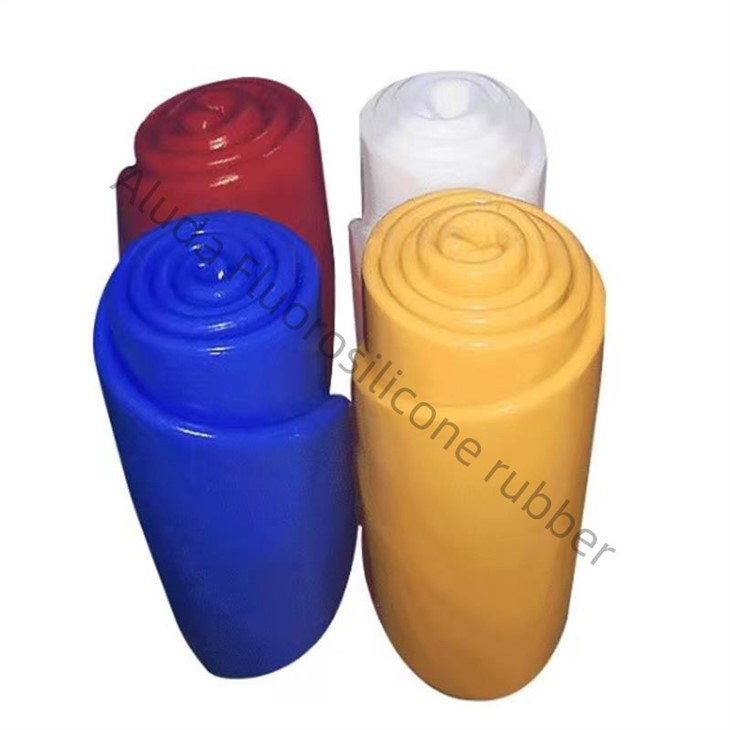
If you're interested in other fluoropolymer - related products, we also offer a range of fluorosilicone rubbers. Check out our High Resilience Low Pressure Variable Fluorosilicone Rubber, Low Pressure Variable Fluorosilicone Rubber, and High Resilience Fluorosilicone Rubber. These rubbers also have great thermal stability and other useful properties for various applications.
Let's Talk Business
If you're in the market for high - quality fluoropolymer extrusions, don't hesitate to reach out. Whether you need a custom - made product or a standard one, we're here to help. Our team can work with you from the design stage all the way to the final production. So, let's start a conversation and see how we can meet your needs.
References
- "Fluoropolymers Handbook" by Harry Allcock, Frederick Lampe, and Joseph Mark.
- Journal articles on fluoropolymer extrusion and thermal properties from Polymer Engineering and Science.