

What are the heat - aging properties of Fluorosilicone Rubber?
Fluorosilicone rubber (FSR) has long been recognized for its exceptional performance in a wide range of industrial applications. As a leading supplier of fluorosilicone rubber, we understand the importance of its heat - aging properties. In this blog, we will delve into the heat - aging characteristics of fluorosilicone rubber, exploring its mechanisms, influencing factors, and implications for various applications.
Heat - Aging Mechanisms of Fluorosilicone Rubber
Heat aging is a complex process that involves a series of chemical and physical changes in the rubber material. For fluorosilicone rubber, the primary heat - aging mechanisms include oxidation, cross - linking, and chain scission.
Oxidation is one of the most significant factors in heat aging. When fluorosilicone rubber is exposed to high temperatures in the presence of oxygen, the reactive sites on the polymer chains can react with oxygen molecules. This leads to the formation of peroxides and other oxygen - containing functional groups. These peroxides are unstable and can decompose, initiating further oxidation reactions and causing the degradation of the rubber structure.
Cross - linking is another important aspect during heat aging. At elevated temperatures, the polymer chains in fluorosilicone rubber can form additional cross - links between each other. A moderate amount of cross - linking can enhance the mechanical properties of the rubber, such as hardness and tensile strength. However, excessive cross - linking can make the rubber brittle and reduce its elasticity and flexibility.
Chain scission, on the other hand, involves the breaking of the polymer chains. High temperatures can provide enough energy to break the chemical bonds in the chains, resulting in a decrease in molecular weight. This can lead to a reduction in the mechanical strength and physical properties of the rubber, such as elongation at break and tear resistance.
Factors Influencing the Heat - Aging Properties of Fluorosilicone Rubber
Temperature
Temperature is the most crucial factor affecting the heat - aging properties of fluorosilicone rubber. Generally, the rate of heat - aging reactions increases exponentially with an increase in temperature. According to the Arrhenius equation, the reaction rate constant (k = A\times e^{-\frac{E_a}{RT}}), where (A) is the pre - exponential factor, (E_a) is the activation energy, (R) is the gas constant, and (T) is the absolute temperature. As the temperature rises, the value of (e^{-\frac{E_a}{RT}}) increases, leading to a faster reaction rate. For fluorosilicone rubber, long - term exposure to high temperatures can significantly accelerate the oxidation, cross - linking, and chain scission processes, thereby reducing its service life.
Oxygen Concentration
Oxygen is essential for the oxidation reaction during heat aging. A higher oxygen concentration in the environment will promote the oxidation of fluorosilicone rubber. In closed systems with limited oxygen supply, the heat - aging rate may be slower compared to open - air environments. However, in applications where the rubber is exposed to air, such as in automotive engine compartments or aerospace components, the presence of oxygen can have a significant impact on the heat - aging performance.

Additives
Additives play a vital role in improving the heat - aging properties of fluorosilicone rubber. Antioxidants are commonly used additives that can scavenge free radicals generated during the oxidation process, thereby inhibiting the oxidation reaction. Heat stabilizers can also be added to enhance the thermal stability of the rubber. These stabilizers can react with the reactive intermediates formed during heat aging, preventing further degradation of the polymer chains.
Cross - Linking Density
The initial cross - linking density of fluorosilicone rubber can affect its heat - aging behavior. A rubber with a higher cross - linking density may have better heat resistance initially because the cross - links can restrict the movement of polymer chains and prevent excessive chain scission. However, during heat aging, further cross - linking may occur, and if the initial cross - linking density is too high, it can lead to excessive brittleness. Therefore, an optimal cross - linking density needs to be achieved to balance the initial properties and heat - aging performance.
Implications of Heat - Aging Properties in Different Applications
Automotive Industry
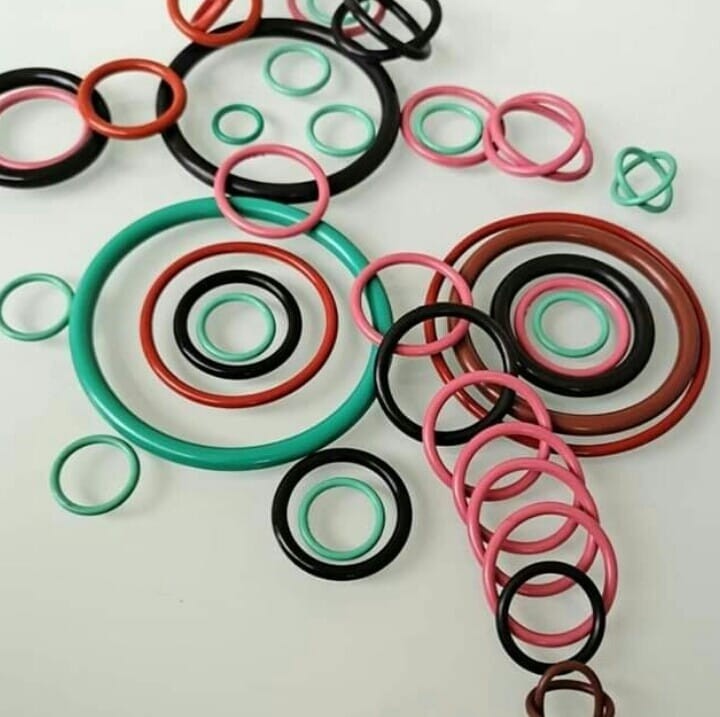
In the automotive industry, fluorosilicone rubber is widely used in engine gaskets, seals, and hoses. These components are exposed to high temperatures generated by the engine. The heat - aging properties of fluorosilicone rubber are crucial for ensuring the long - term performance of these parts. A rubber with good heat - aging resistance can maintain its sealing performance, mechanical strength, and flexibility over an extended period, reducing the risk of leakage and component failure. For example, Fluorosilicon Rubber Sealing Ring used in engine oil seals need to withstand high temperatures and prevent oil leakage. If the rubber ages rapidly due to heat, the sealing performance will be compromised, leading to oil leakage and potential engine damage.
Aerospace Industry
In aerospace applications, fluorosilicone rubber is used in various components, such as O - rings, gaskets, and connectors. These components need to operate in extreme temperature environments, including high - temperature conditions during flight and re - entry. The heat - aging properties of fluorosilicone rubber are essential for ensuring the safety and reliability of aerospace systems. A rubber with excellent heat - aging resistance can maintain its mechanical and sealing properties under high - temperature stress, preventing the leakage of fuel, hydraulic fluids, and other critical substances. Fluorosilicon Rubber Connector used in aerospace electrical systems need to have stable performance even after long - term exposure to high temperatures to ensure proper electrical connections.
Electronics Industry
In the electronics industry, fluorosilicone rubber is used for sealing electronic devices to protect them from dust, moisture, and heat. The heat - aging properties of the rubber are important for maintaining the integrity of the seal. As electronic devices generate heat during operation, the rubber needs to withstand the elevated temperatures without significant degradation. A rubber with good heat - aging resistance can prevent the ingress of contaminants, which can damage the electronic components and reduce the reliability of the devices. The Application Of High Resilience Fluorosilicone Rubber in electronic device sealing can ensure long - term protection and performance.
Our Solutions as a Fluorosilicone Rubber Supplier
As a professional fluorosilicone rubber supplier, we are committed to providing high - quality products with excellent heat - aging properties. We use advanced manufacturing processes and carefully select raw materials to ensure the optimal performance of our fluorosilicone rubber.
We conduct extensive research and development to improve the heat - aging resistance of our products. By adding appropriate antioxidants and heat stabilizers, we can effectively inhibit the oxidation and degradation processes during heat aging. We also optimize the cross - linking density of the rubber to balance the initial properties and long - term heat - aging performance.
Our technical team can provide customized solutions according to the specific requirements of different applications. Whether you need fluorosilicone rubber for automotive, aerospace, or electronics applications, we can offer products with the right heat - aging properties to meet your needs.
Conclusion
The heat - aging properties of fluorosilicone rubber are of great significance in various industrial applications. Understanding the heat - aging mechanisms, influencing factors, and implications is essential for selecting the right rubber material and ensuring the long - term performance of components. As a leading fluorosilicone rubber supplier, we are dedicated to providing high - quality products with excellent heat - aging resistance. If you are interested in our fluorosilicone rubber products or have any questions about heat - aging properties, please feel free to contact us for procurement and further technical discussions.
References
- "Rubber Technology" by Maurice Morton
- "Handbook of Elastomers" edited by A. K. Bhowmick and H. L. Stephens
- Research papers on fluorosilicone rubber heat - aging properties published in polymer science and engineering journals.