

What are the effects of extrusion on the optical properties of fluoropolymers?
Fluoropolymers are a class of high - performance polymers known for their excellent chemical resistance, thermal stability, and low friction properties. Extrusion is a widely used manufacturing process in the production of fluoropolymer products. As a fluoropolymer extrusion supplier, I have witnessed firsthand how the extrusion process can significantly impact the optical properties of fluoropolymers. In this blog, we will explore the effects of extrusion on the optical properties of fluoropolymers in detail.
1. Basics of Fluoropolymers and Extrusion
Fluoropolymers are polymers that contain fluorine atoms in their molecular structure. Common types of fluoropolymers include polytetrafluoroethylene (PTFE), fluorinated ethylene propylene (FEP), and perfluoroalkoxy alkane (PFA). These polymers are used in a variety of applications, such as in the chemical industry, electronics, and aerospace, due to their unique properties.
Extrusion is a process in which a material is forced through a die to create a continuous profile. In the case of fluoropolymers, the raw polymer is heated to a molten state and then pushed through a die of the desired shape. This process can be used to produce pipes, tubes, rods, and other profiles.
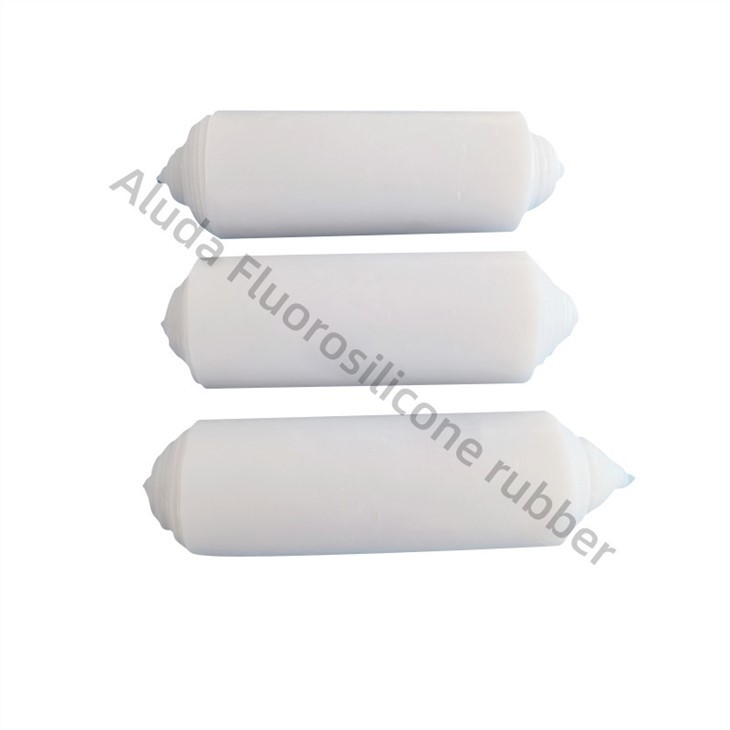

2. Effects of Extrusion on Transparency
One of the most important optical properties of fluoropolymers is transparency. Some fluoropolymers, such as FEP and PFA, are known for their high transparency, which makes them suitable for applications where optical clarity is required, like in windows for chemical reactors or optical fibers.
During the extrusion process, several factors can affect the transparency of fluoropolymers. Firstly, the temperature during extrusion plays a crucial role. If the temperature is too high, the polymer may degrade, leading to the formation of small particles or bubbles within the material. These inhomogeneities can scatter light, reducing the transparency of the extruded product. On the other hand, if the temperature is too low, the polymer may not flow smoothly through the die, resulting in a non - uniform structure that also affects transparency.
Secondly, the shear rate during extrusion can impact transparency. High shear rates can cause orientation of the polymer chains. In some cases, this chain orientation can lead to birefringence, which is the difference in the refractive index of the material depending on the direction of light propagation. Birefringence can cause light to split into two components, reducing the overall clarity of the material.
As a fluoropolymer extrusion supplier, we carefully control the extrusion parameters to ensure optimal transparency. We use advanced temperature control systems and precision dies to maintain a consistent temperature and shear rate throughout the extrusion process.
3. Impact on Color and Hue
Extrusion can also have an effect on the color and hue of fluoropolymers. The raw fluoropolymer materials usually have a natural color, which can be white, off - white, or slightly transparent. However, during the extrusion process, the polymer may undergo chemical reactions or physical changes that alter its color.
For example, exposure to high temperatures for an extended period can cause oxidation of the polymer, leading to a yellowing effect. This is more likely to occur in polymers that are not properly stabilized. Additionally, contaminants in the extrusion equipment or the raw material can also introduce color changes.
To address these issues, we use high - quality raw materials and regularly clean and maintain our extrusion equipment. We also add appropriate stabilizers to the polymer to prevent oxidation and color degradation during the extrusion process.
4. Influence on Gloss and Surface Finish
The gloss and surface finish of an extruded fluoropolymer product are important optical properties, especially for applications where aesthetics are a concern. Extrusion can have a significant impact on these properties.
The surface finish of an extruded fluoropolymer is largely determined by the surface quality of the die. A smooth die surface will result in a smooth and glossy surface finish on the extruded product. However, if the die surface is rough or has defects, these will be transferred to the surface of the polymer, resulting in a dull or uneven finish.
Moreover, the cooling rate after extrusion can affect the gloss. Rapid cooling can cause the polymer to solidify quickly, resulting in a more amorphous structure and a higher gloss. Slow cooling, on the other hand, may allow the polymer chains to crystallize, which can reduce the gloss of the surface.
As a supplier, we pay close attention to the die design and surface treatment. We use precision - machined dies with high - quality surface finishes to ensure a smooth and glossy surface on our extruded fluoropolymer products.
5. Extrusion and Scattering Properties
Scattering of light within a fluoropolymer material can significantly affect its optical properties. Extrusion can introduce various factors that increase or decrease light scattering.
As mentioned earlier, the presence of inhomogeneities such as bubbles, particles, or crystalline regions can scatter light. During extrusion, improper melting or mixing of the polymer can lead to the formation of these inhomogeneities. For example, if the polymer is not fully melted, there may be unmelted particles within the extruded product, which will scatter light.
Chain orientation during extrusion can also affect scattering. Oriented polymer chains can cause anisotropic scattering, where the scattering behavior is different in different directions. This can lead to a non - uniform appearance of the material.
We take measures to minimize light scattering in our extruded fluoropolymer products. We use efficient melting and mixing systems to ensure a homogeneous polymer melt before extrusion. We also optimize the extrusion process to control chain orientation and reduce anisotropic scattering.
6. Applications and Considerations
The effects of extrusion on the optical properties of fluoropolymers have important implications for various applications. In the optical industry, for example, the transparency and low scattering properties of extruded fluoropolymers are crucial for the production of lenses, prisms, and optical fibers. In the packaging industry, the color and gloss of extruded fluoropolymer films can affect the visual appeal of the packaged products.
When considering fluoropolymer extrusion for a specific application, it is important to understand the required optical properties and how the extrusion process can be optimized to achieve them. For instance, if high transparency is required, the extrusion parameters need to be carefully controlled to minimize inhomogeneities and chain orientation.
We offer a wide range of fluoropolymer extrusion products, including High Tear Resistance Fluorosilicone Rubber, Adhesive Fluorosilicone Rubber, and High Resilience Fluorosilicone Rubber. Our products are designed to meet the diverse optical and performance requirements of our customers.
7. Conclusion and Call to Action
In conclusion, the extrusion process has a profound impact on the optical properties of fluoropolymers. Factors such as temperature, shear rate, cooling rate, and die surface quality can all affect transparency, color, gloss, and scattering properties. As a fluoropolymer extrusion supplier, we have the expertise and experience to optimize the extrusion process to achieve the desired optical properties for our customers.
If you are in need of high - quality extruded fluoropolymer products with specific optical properties, we invite you to contact us for a detailed discussion. Our team of experts will work closely with you to understand your requirements and provide the best solutions. Whether you need products for optical applications, packaging, or other industries, we are committed to delivering products that meet your expectations.
References
- Billmeyer, F. W., & Saltzman, M. (1981). Principles of Color Technology. John Wiley & Sons.
- Strong, A. B. (2008). Plastics Materials and Processes: Modeling and Simulation. Prentice Hall.
- Throne, J. L. (1996). Extrusion Dies: Design and Engineering Computations. Hanser Publishers.