

How to test the radiation resistance of Fluorosilicone Elastomer?
Hey there! As a supplier of Fluorosilicone Elastomer, I often get asked about how to test the radiation resistance of this amazing material. In this blog post, I'm gonna share some insights on this topic based on my experience in the industry.
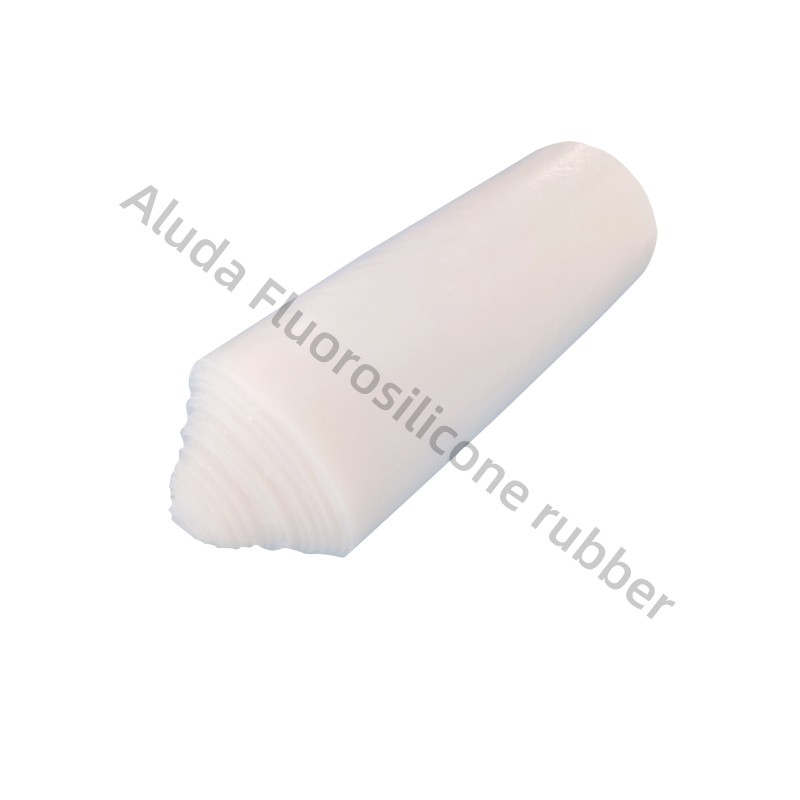
First off, let's talk a bit about Fluorosilicone Elastomer. It's a super versatile material that combines the best of both fluoropolymers and silicones. It has excellent resistance to heat, chemicals, and weathering, making it a popular choice in many industries, from aerospace to automotive and electronics. But when it comes to environments with high radiation levels, we need to make sure it can hold up.
Why Test Radiation Resistance?
Radiation can have a pretty significant impact on materials. It can cause changes in the molecular structure of Fluorosilicone Elastomer, leading to degradation of its physical and mechanical properties. This can affect its performance in critical applications, such as in nuclear power plants, space exploration, or medical devices that are exposed to radiation during sterilization or imaging procedures. So, testing its radiation resistance is crucial to ensure its reliability and safety.
Types of Radiation and Their Effects
There are different types of radiation, each with its own unique effects on Fluorosilicone Elastomer.
- Ionizing Radiation: This includes gamma rays, X - rays, and high - energy particles like neutrons. Ionizing radiation can break chemical bonds in the elastomer, creating free radicals. These free radicals can react with other molecules in the material, causing cross - linking or chain scission. Cross - linking can make the elastomer harder and more brittle, while chain scission can lead to a loss of strength and elasticity.
- Non - Ionizing Radiation: Such as ultraviolet (UV) light. UV radiation can cause surface degradation of the Fluorosilicone Elastomer, leading to discoloration, cracking, and a reduction in its weatherability.
Testing Methods
1. Accelerated Aging Tests
One of the most common ways to test radiation resistance is through accelerated aging tests. In these tests, samples of the Fluorosilicone Elastomer are exposed to high doses of radiation in a controlled environment. For example, gamma ray sources can be used to simulate the effects of long - term radiation exposure in a relatively short period of time.
We typically place the samples in a radiation chamber, where they are exposed to a specific dose rate of gamma rays for a set period. After the exposure, we measure various properties of the samples, such as hardness, tensile strength, elongation at break, and compression set. By comparing these properties with those of unexposed samples, we can determine the degree of degradation caused by the radiation.
2. Real - World Simulations
In some cases, it's also important to simulate real - world conditions. For example, if the Fluorosilicone Elastomer is going to be used in a space application, we might expose the samples to a combination of radiation, vacuum, and extreme temperatures. This can give us a more accurate picture of how the material will perform in its intended environment.
We can use specialized equipment to create these conditions. For instance, a space simulation chamber can be used to expose the samples to a high - vacuum environment while simultaneously irradiating them with a combination of solar particles and cosmic rays.
3. Chemical Analysis
Chemical analysis techniques can also be used to study the changes in the molecular structure of the Fluorosilicone Elastomer after radiation exposure. Fourier - transform infrared spectroscopy (FTIR) can be used to identify the functional groups in the material and detect any changes in their concentration. Nuclear magnetic resonance (NMR) spectroscopy can provide information about the molecular structure and the degree of cross - linking or chain scission.
Factors Affecting Radiation Resistance
Several factors can affect the radiation resistance of Fluorosilicone Elastomer:

- Composition: The chemical composition of the elastomer, including the type and amount of fillers, additives, and cross - linkers, can have a significant impact on its radiation resistance. For example, some fillers can act as radiation shields, reducing the amount of radiation that reaches the elastomer matrix.
- Processing Conditions: The way the Fluorosilicone Elastomer is processed, such as the curing temperature and time, can also affect its radiation resistance. Proper processing can ensure a more uniform cross - linked structure, which can improve its resistance to radiation.
Our Products and Their Radiation Resistance
At our company, we offer a range of Fluorosilicone Elastomer products, each designed to meet different application requirements.
- High Resilience Fluorosilicone Rubber: This product is known for its excellent resilience and elasticity. Our testing has shown that it has good radiation resistance, making it suitable for applications where it needs to maintain its flexibility even after exposure to radiation.
- Extruded Fluorosilicone Rubber: Ideal for applications that require precise shapes and dimensions. We've conducted extensive radiation testing on this product to ensure its performance in radiation - prone environments.
- Adhesive Fluorosilicone Rubber: This rubber has strong adhesive properties, which are maintained even after radiation exposure. It's suitable for applications where bonding is critical in radiation - rich settings.
Conclusion
Testing the radiation resistance of Fluorosilicone Elastomer is a complex but essential process. By using a combination of accelerated aging tests, real - world simulations, and chemical analysis, we can accurately assess the performance of this material under radiation exposure. At our company, we're committed to providing high - quality Fluorosilicone Elastomer products with excellent radiation resistance. If you're interested in learning more about our products or have specific requirements for radiation - resistant materials, we'd love to hear from you. Feel free to reach out to us for a detailed discussion and to start a procurement conversation.
References
- ASTM International standards on rubber testing
- Journal of Applied Polymer Science articles on radiation effects on elastomers
- Research papers from the Institute of Nuclear Materials Management on radiation - resistant materials