

How does Fluorosilicone Rubber respond to cyclic loading?
Hey there! As a supplier of Fluorosilicone Rubber, I've gotten a lot of questions about how this amazing material responds to cyclic loading. So, I thought I'd dive deep into this topic and share some insights with you all.
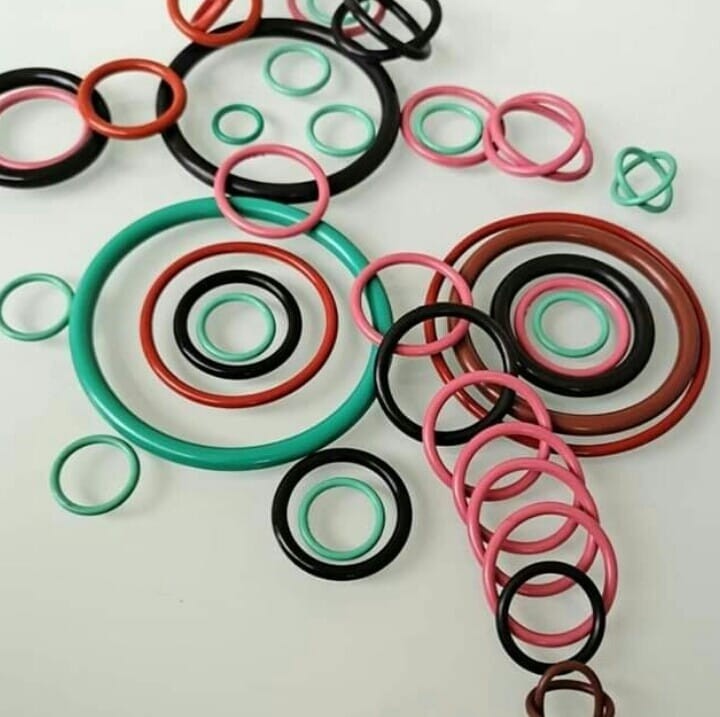
First off, let's quickly talk about what Fluorosilicone Rubber is. It's a high - performance elastomer that combines the best of silicone rubber's flexibility and low - temperature properties with the chemical resistance of fluorocarbons. This makes it a go - to material for a wide range of applications, from Fluorosilicon Rubber Sealing Ring used in automotive engines to Fluorosilicone Rubber Diaphragm in chemical processing equipment and Fluorosilicon Rubber Sheet for gasketing.
Now, cyclic loading. This is when a material is subjected to repeated loading and unloading. It could be in the form of vibrations, mechanical shocks, or regular stress - strain cycles. In real - world applications, components made from Fluorosilicone Rubber often experience this kind of cyclic loading. For example, a sealing ring in an engine might be compressed and released thousands of times during the engine's operation.
So, how does Fluorosilicone Rubber hold up under cyclic loading?
1. Fatigue Resistance
One of the key factors in a material's response to cyclic loading is its fatigue resistance. Fatigue is the weakening of a material caused by repeated loading. Fluorosilicone Rubber has pretty good fatigue resistance. Its molecular structure allows it to withstand a large number of stress - strain cycles without significant degradation.
The cross - linked structure of Fluorosilicone Rubber gives it the ability to return to its original shape after each cycle. When the rubber is loaded, the polymer chains stretch, but they can bounce back once the load is removed. This elastic behavior means that it can handle cyclic loading for a long time without breaking down.

However, the fatigue resistance can be affected by factors like the amplitude of the load, the frequency of the cycles, and the temperature. Higher loads and frequencies can increase the rate of fatigue. And extreme temperatures, especially high ones, can also accelerate the degradation process. For instance, at very high temperatures, the rubber may start to lose its elasticity more quickly, reducing its ability to withstand cyclic loading.
2. Heat Generation
During cyclic loading, Fluorosilicone Rubber generates heat. This is due to the internal friction within the material as the polymer chains move and stretch during each cycle. The heat generation can be a concern because it can lead to a rise in temperature, which in turn can affect the material's properties.
If the heat isn't dissipated properly, it can cause the rubber to age faster. The increased temperature can break the cross - links in the rubber, leading to a loss of elasticity and strength. To mitigate this, proper design and heat management are crucial. For example, components can be designed with good ventilation or heat - dissipating features to keep the temperature in check.
3. Set and Deformation
Another aspect to consider is the set and deformation of Fluorosilicone Rubber under cyclic loading. Set refers to the permanent deformation that occurs after the material has been subjected to repeated loading. A small amount of set is normal, but excessive set can be a problem.
Over time, the repeated stretching and compressing can cause the rubber to gradually lose its ability to fully recover its original shape. This can be an issue in applications where precise sealing or dimensional stability is required. For example, if a sealing ring has too much set, it may not provide an effective seal anymore.
The amount of set and deformation depends on factors such as the material's hardness, the magnitude of the load, and the number of cycles. Softer Fluorosilicone Rubber compounds are generally more prone to set, but they also offer better flexibility.
4. Chemical Resistance During Cyclic Loading
Fluorosilicone Rubber is known for its excellent chemical resistance. But what happens to this property during cyclic loading? Well, the good news is that cyclic loading doesn't significantly affect its chemical resistance.
The chemical resistance of Fluorosilicone Rubber comes from the fluorine atoms in its molecular structure. These fluorine atoms form strong bonds that protect the rubber from attack by chemicals. Even when the rubber is undergoing cyclic loading, these chemical bonds remain intact, allowing it to resist a wide range of chemicals such as fuels, oils, and solvents.
This is a huge advantage in applications where the rubber is exposed to both cyclic loading and harsh chemicals. For example, in the automotive industry, a Fluorosilicone Rubber sealing ring in a fuel system has to withstand both the cyclic compression and the presence of gasoline or diesel.
5. Effects of Environmental Factors
The response of Fluorosilicone Rubber to cyclic loading can also be influenced by environmental factors. Moisture, oxygen, and ozone can all have an impact on the material's performance.
Moisture can cause swelling in the rubber, which can change its mechanical properties and affect its ability to withstand cyclic loading. Oxygen and ozone can cause oxidation and degradation of the rubber over time. This is especially true at higher temperatures and in the presence of sunlight.
To protect against these environmental factors, special additives can be incorporated into the Fluorosilicone Rubber during the manufacturing process. These additives can enhance the material's resistance to oxidation, ozone, and moisture, ensuring that it maintains its performance under cyclic loading in various environments.
Applications and Considerations
In applications where cyclic loading is a concern, it's important to choose the right Fluorosilicone Rubber compound. Different compounds have different properties, so the choice depends on the specific requirements of the application.
For example, if the component will be exposed to high - frequency cyclic loading at moderate temperatures, a compound with high fatigue resistance and good heat - dissipating properties would be ideal. On the other hand, if the application involves exposure to chemicals and cyclic loading, a compound with excellent chemical resistance should be selected.
Proper testing is also essential. Before using Fluorosilicone Rubber in a cyclic - loading application, it should be tested under conditions that mimic the actual operating environment. This can help identify any potential issues and ensure that the material will perform as expected.
Conclusion
In conclusion, Fluorosilicone Rubber has a relatively good response to cyclic loading. Its fatigue resistance, elastic behavior, and chemical resistance make it a suitable choice for many applications where cyclic loading is present. However, factors like heat generation, set, and environmental effects need to be carefully considered.
If you're in the market for Fluorosilicone Rubber products and need to ensure they can handle cyclic loading in your specific application, don't hesitate to reach out. We're here to help you choose the right materials and provide you with the best solutions. Whether it's a Fluorosilicon Rubber Sealing Ring, a Fluorosilicone Rubber Diaphragm, or a Fluorosilicon Rubber Sheet, we've got you covered. Let's have a chat about your requirements and see how we can work together to make your project a success.
References
- "Elastomers and Rubber Compounding Materials" by B. D. Croll and M. J. Roberts
- "Handbook of Elastomers" edited by A. K. Bhowmick and H. L. Stephens