

How does Fluorosilicone Rubber perform in high - frequency applications?
Fluorosilicone rubber, a unique elastomer, has gained significant attention in various industrial applications, especially in high - frequency scenarios. As a leading supplier of fluorosilicone rubber, I've witnessed firsthand the remarkable performance of this material in high - frequency environments. In this blog, I'll delve into how fluorosilicone rubber performs in high - frequency applications, exploring its properties, advantages, and real - world uses.
Key Properties of Fluorosilicone Rubber for High - Frequency Applications
Dielectric Constant and Loss Tangent
One of the most crucial aspects of a material's performance in high - frequency applications is its dielectric properties. The dielectric constant (εr) of a material determines how much electrical energy it can store when an electric field is applied. Fluorosilicone rubber typically has a relatively low and stable dielectric constant over a wide range of frequencies. This stability is essential because it ensures that the electrical characteristics of the material do not change significantly as the frequency varies.
The loss tangent (tan δ) is another important parameter. It represents the ratio of the energy dissipated as heat to the energy stored in the material. A low loss tangent is desirable in high - frequency applications because it means less energy is wasted as heat. Fluorosilicone rubber exhibits a low loss tangent, which makes it an excellent choice for applications where energy efficiency is crucial, such as in high - frequency circuits and antennas.

Thermal Stability
High - frequency applications often generate a significant amount of heat. Fluorosilicone rubber has excellent thermal stability, with the ability to withstand high temperatures without significant degradation of its mechanical and electrical properties. It can operate continuously at temperatures ranging from - 60°C to 200°C, and in some cases, even higher for short periods. This thermal stability allows fluorosilicone rubber components to maintain their performance in high - frequency devices that generate heat during operation.
Chemical Resistance
In high - frequency applications, the materials used may be exposed to various chemicals, such as solvents, fuels, and lubricants. Fluorosilicone rubber has outstanding chemical resistance, particularly against fuels and oils. This resistance ensures that the rubber components do not swell, crack, or lose their mechanical integrity when in contact with these chemicals. As a result, fluorosilicone rubber can be used in high - frequency applications in harsh chemical environments, such as in the aerospace and automotive industries.
Advantages of Fluorosilicone Rubber in High - Frequency Applications
Signal Integrity
In high - frequency communication systems, signal integrity is of utmost importance. The low dielectric constant and loss tangent of fluorosilicone rubber help to minimize signal loss and distortion. This means that the signals transmitted through fluorosilicone rubber - based components, such as cables and connectors, are more accurate and reliable. For example, in high - speed data transmission cables, fluorosilicone rubber insulation can maintain the integrity of the signal over long distances, reducing the need for signal boosters.
Durability
The combination of thermal stability and chemical resistance makes fluorosilicone rubber highly durable in high - frequency applications. Components made from fluorosilicone rubber can withstand the rigors of continuous operation, temperature fluctuations, and exposure to chemicals. This durability translates into longer service life and reduced maintenance costs for high - frequency devices. For instance, in aerospace radar systems, fluorosilicone rubber seals and gaskets can maintain their performance over long periods, even in extreme environmental conditions.
Design Flexibility
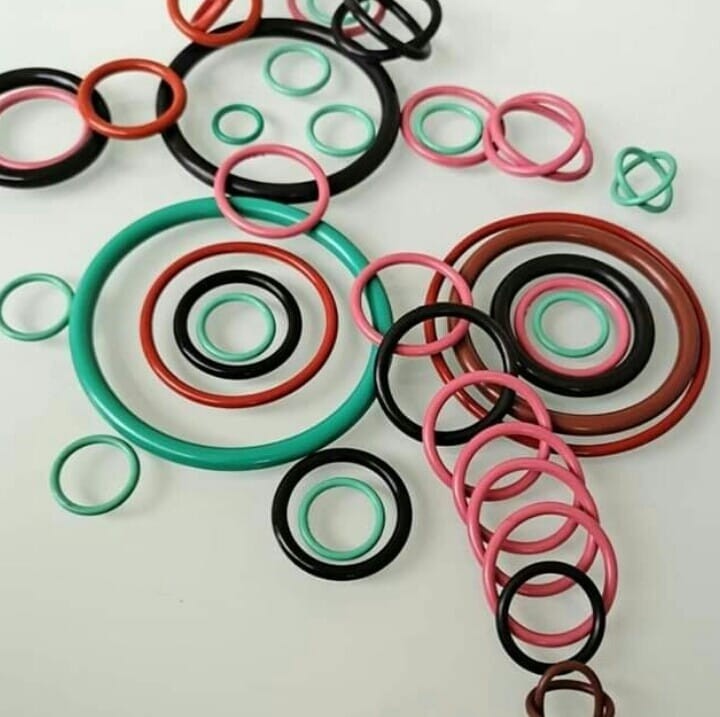
Fluorosilicone rubber can be easily molded into various shapes and sizes, providing designers with greater flexibility in creating high - frequency components. It can be used to manufacture a wide range of products, including Fluorosilicon Rubber Connector, Fluorosilicon Rubber Sealing Ring, and Fluorosilicon Rubber Sheet. This versatility allows for the development of customized solutions to meet the specific requirements of different high - frequency applications.
Real - World Applications of Fluorosilicone Rubber in High - Frequency Scenarios
Aerospace Industry
In the aerospace industry, high - frequency communication and radar systems are essential for navigation, surveillance, and communication. Fluorosilicone rubber is used in various components of these systems, such as antenna seals, cable insulation, and connector gaskets. The material's low loss tangent ensures efficient signal transmission, while its thermal and chemical resistance allows it to withstand the harsh conditions of aerospace environments, including high altitudes, extreme temperatures, and exposure to fuels.
Telecommunications
The telecommunications industry relies on high - frequency signals for data transmission and communication. Fluorosilicone rubber is used in the insulation of high - speed data cables and the sealing of connectors. Its low dielectric constant and loss tangent help to maintain the integrity of the signals, while its durability ensures long - term performance in telecommunications equipment.
Automotive Industry
Modern vehicles are increasingly equipped with high - frequency electronic systems, such as radar sensors for collision avoidance and communication systems for vehicle - to - vehicle (V2V) and vehicle - to - infrastructure (V2I) communication. Fluorosilicone rubber is used in the seals and gaskets of these electronic components to protect them from moisture, dust, and chemicals. Its thermal stability also allows it to perform well in the high - temperature environment under the hood of a vehicle.
Conclusion
Fluorosilicone rubber offers excellent performance in high - frequency applications due to its unique combination of dielectric properties, thermal stability, and chemical resistance. Its ability to maintain signal integrity, durability, and design flexibility make it an ideal choice for a wide range of industries, including aerospace, telecommunications, and automotive.
As a supplier of fluorosilicone rubber, I am committed to providing high - quality products that meet the specific needs of high - frequency applications. If you are looking for reliable fluorosilicone rubber solutions for your high - frequency projects, I encourage you to contact me for further discussion and procurement. We can work together to find the best fluorosilicone rubber products for your requirements.
References
- "Handbook of Elastomers" by Bhupendra K. Gupta.
- "High - Frequency Electronics: Design and Applications" by Joseph J. Carr.
- Industry reports on materials for high - frequency applications from leading research institutions.