

How can the performance of Fluorosilicone Elastomer be further improved?
As a supplier of Fluorosilicone Elastomer, I've witnessed firsthand the remarkable properties and wide - ranging applications of this material. Fluorosilicone Elastomer combines the best of both fluoropolymers and silicones, offering excellent resistance to high and low temperatures, fuels, oils, and chemicals. However, in today's highly competitive market, there is always room for improvement. In this blog, I'll explore several key strategies to further enhance the performance of Fluorosilicone Elastomer.
1. Reinforcement of Fillers
One of the most common ways to improve the mechanical properties of Fluorosilicone Elastomer is through the use of fillers. Fillers can enhance the strength, hardness, and abrasion resistance of the elastomer. For example, silica is a widely used filler in Fluorosilicone Elastomer. The addition of fumed silica can significantly increase the tensile strength and tear strength of the elastomer. By adjusting the particle size and surface treatment of the silica, we can optimize its dispersion in the elastomer matrix, which in turn improves the overall performance.

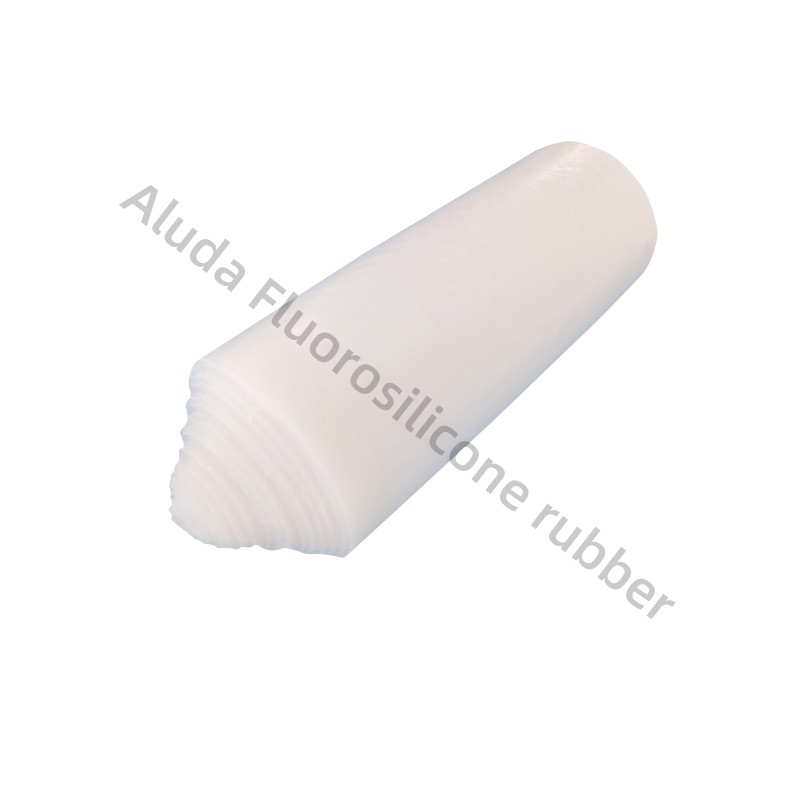
Another promising filler is carbon black. Carbon black not only improves the mechanical properties but also enhances the electrical conductivity of the Fluorosilicone Elastomer. This property is particularly useful in applications where static electricity dissipation is required, such as in the automotive and aerospace industries. When selecting carbon black, factors such as particle size, structure, and surface area need to be carefully considered to achieve the desired performance improvement.
2. Cross - Linking Optimization
The cross - linking density and structure play a crucial role in determining the performance of Fluorosilicone Elastomer. By carefully controlling the cross - linking process, we can improve the heat resistance, chemical resistance, and mechanical properties of the elastomer.
Peroxide cross - linking is a commonly used method for Fluorosilicone Elastomer. By adjusting the type and amount of peroxide, we can control the cross - linking density. Higher cross - linking density generally leads to better heat resistance and mechanical strength. However, excessive cross - linking can also make the elastomer brittle, so a balance needs to be struck.
In addition to peroxide cross - linking, addition - type cross - linking using platinum catalysts is also an effective method. This method offers several advantages, such as lower curing temperature, faster curing speed, and better transparency. By optimizing the catalyst system and the cross - linking agent, we can achieve a more uniform cross - linking structure, which improves the overall performance of the Fluorosilicone Elastomer.
3. Modification of Polymer Structure
The chemical structure of the Fluorosilicone Elastomer can be modified to improve its performance. For example, by introducing functional groups into the polymer chain, we can enhance the adhesion, compatibility, and chemical resistance of the elastomer.
One approach is to incorporate fluorinated side chains into the silicone backbone. This can improve the resistance of the elastomer to fuels, oils, and chemicals. The length and distribution of the fluorinated side chains can be adjusted to optimize the performance. Another modification method is to introduce polar groups, such as hydroxyl or carboxyl groups, into the polymer chain. These polar groups can improve the adhesion of the Fluorosilicone Elastomer to other materials, which is important in applications such as bonding and coating.
4. Blending with Other Polymers
Blending Fluorosilicone Elastomer with other polymers is another effective way to improve its performance. By combining the unique properties of different polymers, we can create materials with enhanced performance characteristics.
For example, blending Fluorosilicone Elastomer with fluoropolymers, such as polytetrafluoroethylene (PTFE), can improve the chemical resistance and low - friction properties of the elastomer. PTFE has excellent chemical resistance and low surface energy, which can be transferred to the Fluorosilicone Elastomer through blending. On the other hand, blending with silicone rubber can improve the flexibility and low - temperature performance of the Fluorosilicone Elastomer.
5. Surface Treatment
Surface treatment can also be used to improve the performance of Fluorosilicone Elastomer. By applying a surface coating or treatment, we can enhance the adhesion, scratch resistance, and chemical resistance of the elastomer.
One common surface treatment method is plasma treatment. Plasma treatment can modify the surface chemistry of the Fluorosilicone Elastomer, increasing its surface energy and improving its adhesion to other materials. Another method is the application of a protective coating, such as a fluoropolymer coating. This coating can provide an additional layer of protection against chemicals, abrasion, and environmental factors.
Applications and Performance Requirements
The performance requirements of Fluorosilicone Elastomer vary depending on its applications. For example, in the medical field, the elastomer needs to have excellent biocompatibility, low toxicity, and good sterilization resistance. By improving the performance of the Fluorosilicone Elastomer, we can expand its applications in this area.
In the automotive industry, Fluorosilicone Elastomer is used in gaskets, seals, and hoses. These applications require the elastomer to have high heat resistance, oil resistance, and mechanical strength. By implementing the strategies mentioned above, we can meet the increasingly demanding performance requirements in the automotive industry.
For applications such as Fluorosilicone Rubber for Strap, the elastomer needs to have good flexibility, durability, and resistance to environmental factors. Our efforts to improve the performance of Fluorosilicone Elastomer can ensure that it meets these requirements and provides a high - quality solution for strap applications.
In the case of Adhesive Fluorosilicone Rubber, adhesion is a critical performance factor. Through cross - linking optimization and polymer structure modification, we can enhance the adhesion properties of the elastomer, making it more suitable for bonding applications.
Extruded Fluorosilicone Rubber requires good processability and dimensional stability. By adjusting the filler system and cross - linking density, we can improve the extrudability of the elastomer and ensure consistent product quality.
Conclusion
In conclusion, there are several effective strategies to further improve the performance of Fluorosilicone Elastomer, including reinforcement of fillers, cross - linking optimization, modification of polymer structure, blending with other polymers, and surface treatment. By carefully considering the specific applications and performance requirements, we can select the most appropriate strategies to achieve the desired performance improvement.
As a supplier of Fluorosilicone Elastomer, we are committed to continuous innovation and improvement. We have a team of experienced researchers and technicians who are dedicated to developing new and improved products. If you are interested in our Fluorosilicone Elastomer products or have specific performance requirements, please feel free to contact us for procurement and negotiation. We look forward to working with you to provide high - quality Fluorosilicone Elastomer solutions.
References
- "Handbook of Elastomers" by B. K. Gupta
- "Silicone Elastomers: Science and Technology" by A. L. Andrianov
- "Fluoropolymers: Synthesis, Properties, and Applications" by K. L. Mittal